
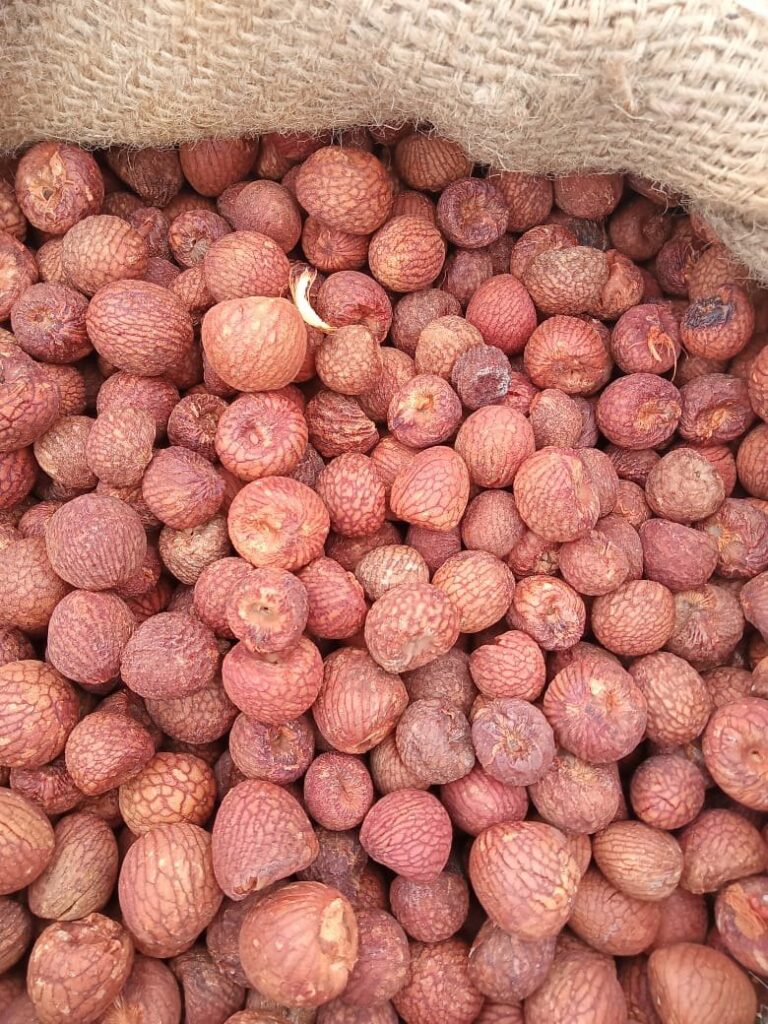
Betel nut
Betel nut refers to the seed of the Areca palm (Areca catechu), commonly chewed in a stimulating preparation known as paan or quid across Asia and the Pacific.
Key Specifications & Details:
Botanical & Physical: The Areca palm yields clusters of fibrous fruits. Each fruit contains a single, hard, brown seed (the “nut”), roughly the size of a date pit. It is typically sliced, grated, or used whole.
Primary Use & Preparation: It is rarely consumed alone. The standard preparation involves wrapping thin slices of the raw or processed nut in a betel leaf (Piper betle) smeared with slaked lime (calcium hydroxide). Tobacco and other flavorings like cardamom or cloves are often added. Chewing produces a copious, brick-red saliva.
Pharmacological Effect: The active compound, arecoline, is a mild central nervous system stimulant. It induces a sensation of warmth, heightened alertness, and mild euphoria, and can suppress hunger.
Health Impact: Classified as a Group 1 human carcinogen by the WHO. Chronic use is irrefutably linked to oral submucous fibrosis (a pre-cancerous condition), oral cancer, esophageal cancer, and severe dental decay.
Cultural & Economic Role: Deeply embedded in social rituals, ceremonies, and as a daily stimulant for millions, particularly in South Asia, Southeast Asia, and Melanesia. It represents a significant informal economic sector.
Legal Status: Its sale and use are restricted or banned in several countries and jurisdictions due to its severe health risks.